
Understanding The Bible – Episode 10
Let’s get into episode 10 of our Understanding the Bible series.
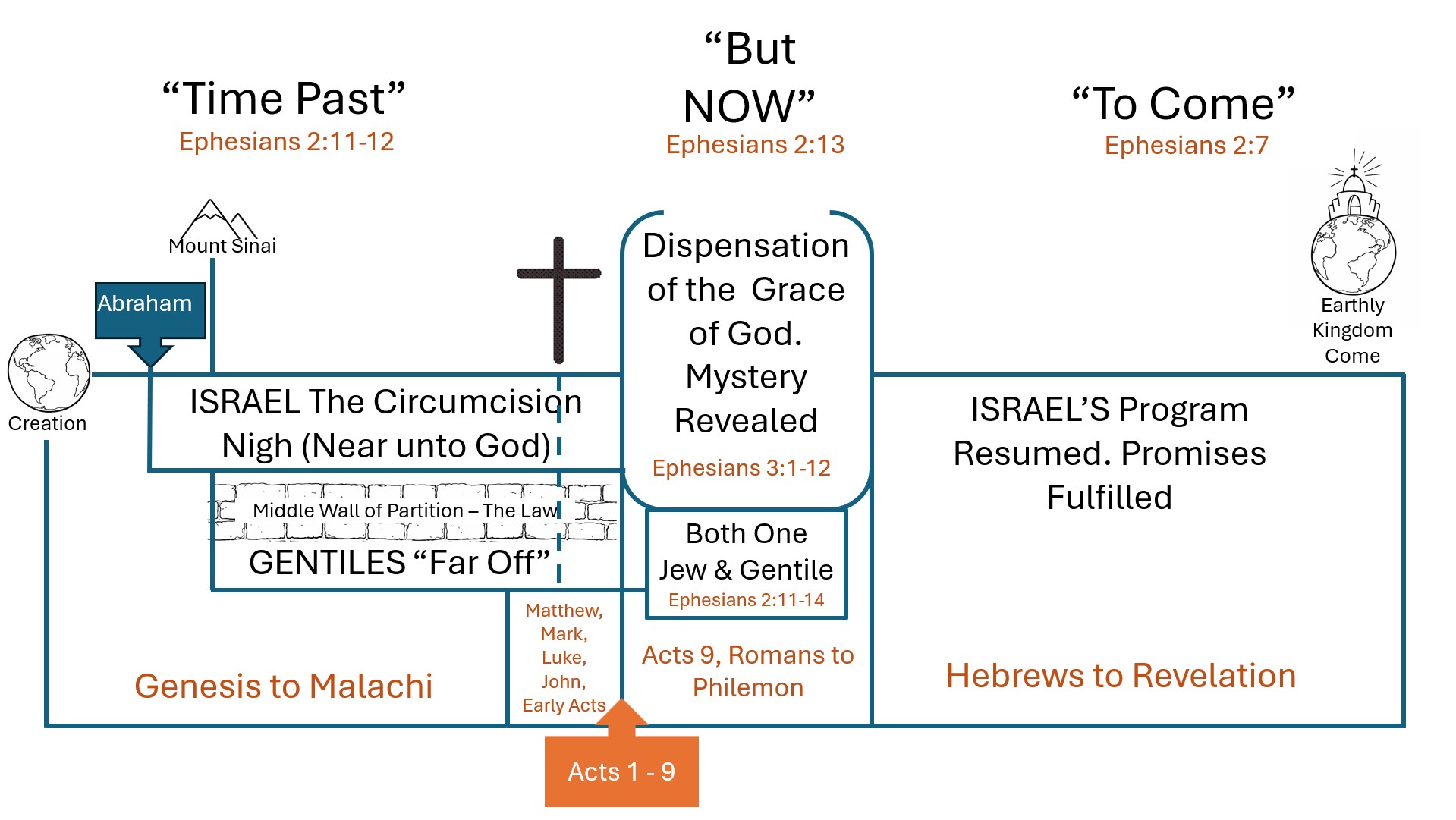
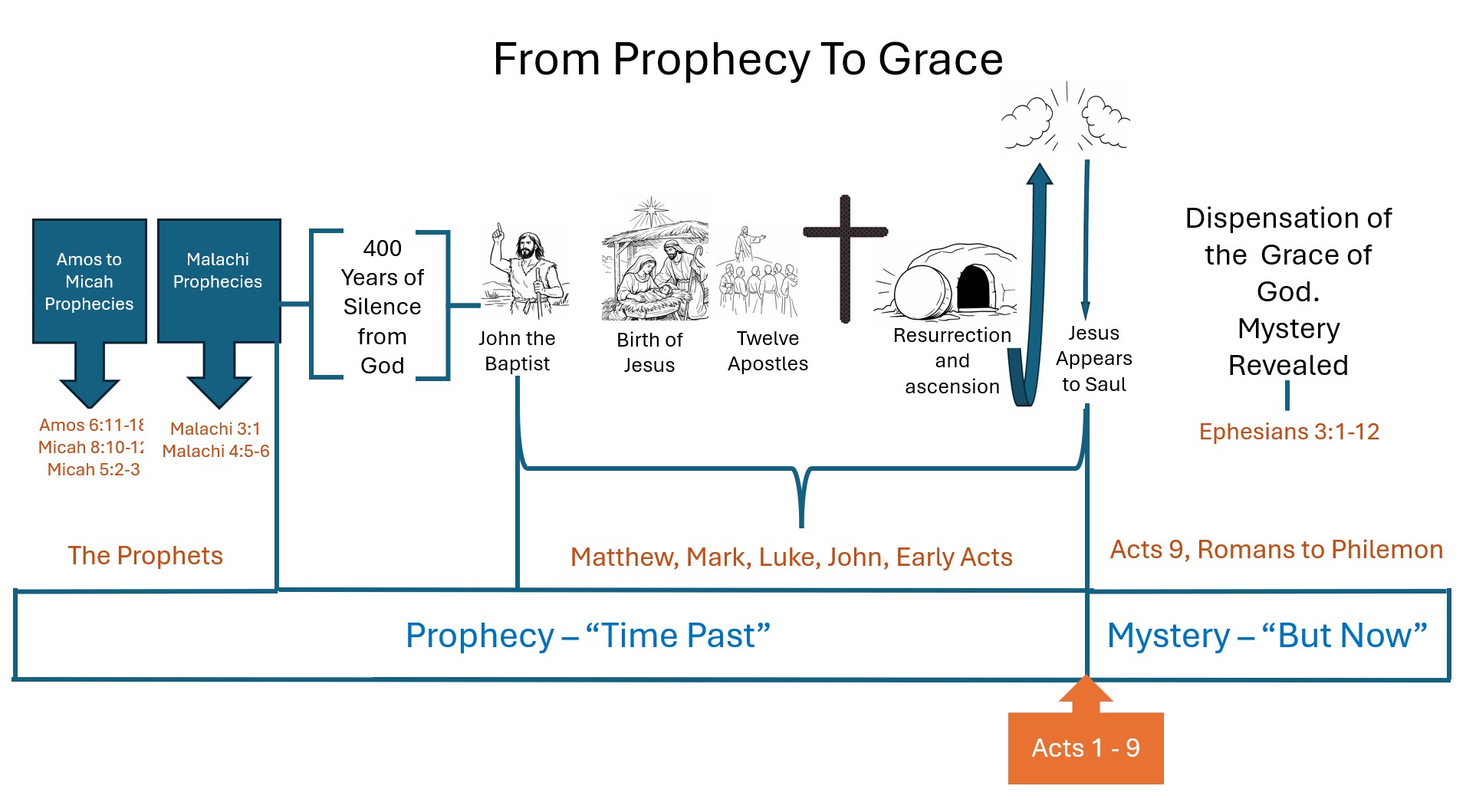
As per usual, we’ve included our two timeline charts below this recording to help us see more clearly the workings of God’s timeline.
The purpose of this series is to stir up in you a hunger to really know God’s Word, so you’re never satisfied just staying where you are, but you want to “increase in the knowledge of God”.
That’s God’s desire for you and me in this dispensation of grace, as Paul says in 1 Timothy 2:4,
Who (that’s God) will have all men to be saved, and to come unto the knowledge of the truth.
“Speed Slider”
 Press Image To Enlarge


Understanding The Bible – Episode 10 – Transcript
Okay, folks, let’s get into episode 10 of our Understanding the Bible series.
As per usual, we’ve included our two timeline charts below this recording to help us see more clearly the workings of God’s timeline.
The purpose of this series is to stir up in you a hunger to really know God’s Word, so you’re never satisfied just staying where you are, but you want to “increase in the knowledge of God”.
That’s God’s desire for you and me in this dispensation of grace, as Paul says in 1 Timothy 2:4,
Who (that’s God) will have all men to be saved, and to come unto the knowledge of the truth.
We want you to share in that “mutual faith” Paul talks about in Romans 1, especially about what God’s doing now in this dispensation of grace and how we walk in line with His program today.
Bible study is serious business because there’s a Satanic policy of evil that never ceases trying to confuse and rob us of what God’s so clearly given us. Only through studying the Word rightly divided can we understand God’s plan and rejoice in it to His glory.
Grab your Bibles and turn to Acts chapter 2.
We suggested last time to read verses 1–21. So you’d get used to the words the Bible uses to describe what’s happening at Pentecost, and how Peter explains it.
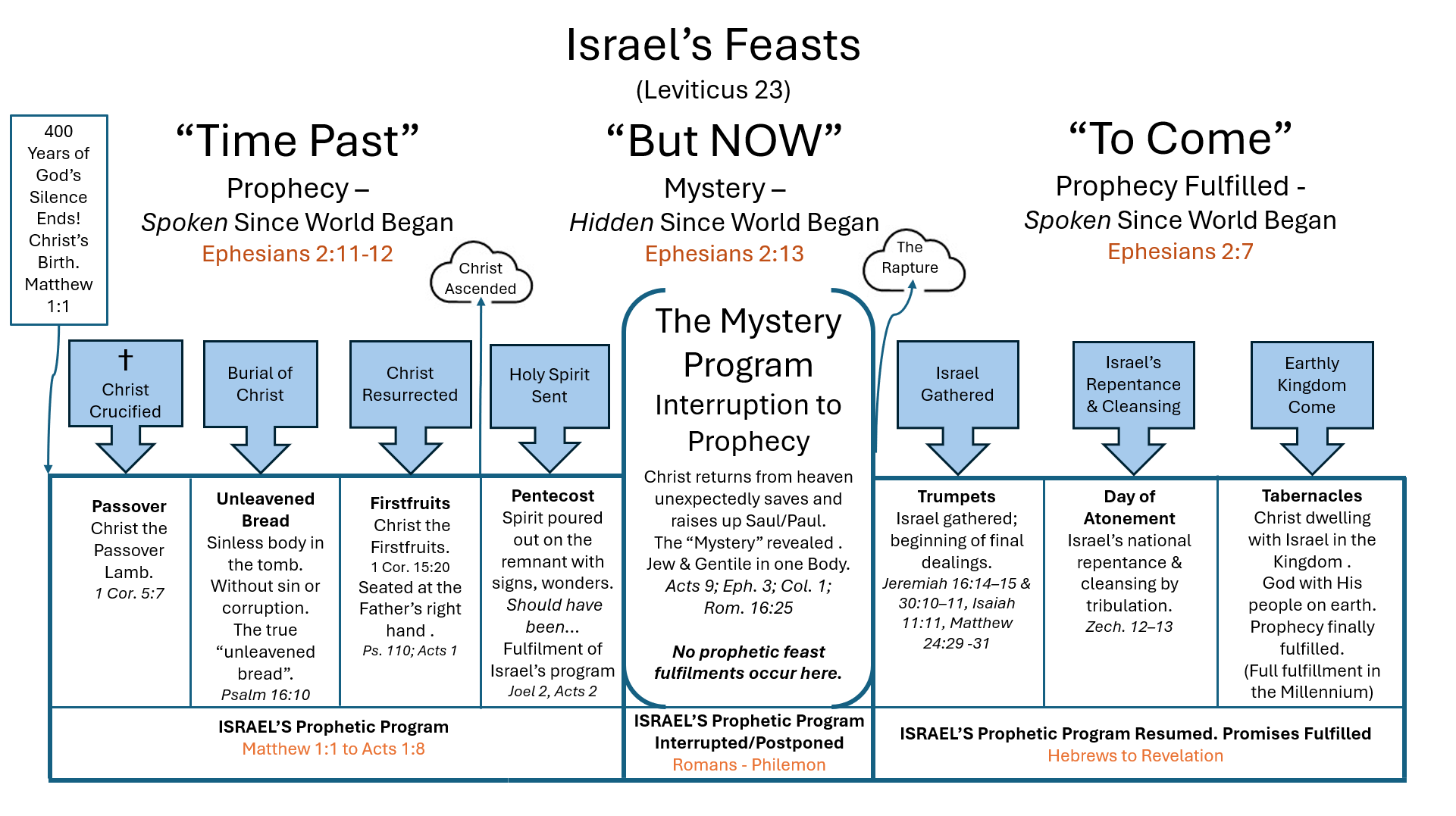
We’ve included a third timeline chart in this episode, and you’ll see it below this recording.
This third chart shows how Israel’s program follows the feast calendar from Leviticus 23, and we see that in the “Times Past” era, we have the feasts of:
PASSOVER (Lamb slain, fulfilled in Christ on the Cross)
UNLEAVENED BREAD (Without sin, fulfilled in Christ’s sinless body, buried without seeing corruption)
FIRSTFRUITS (First sheaves of the harvest, fulfilled in Christ, the Firstfruits as explained in 1 Corinthians 15:20)
PENTECOST (Spirit poured out on the remnant with signs and wonders, Joel 2, fulfilled in Acts 2)
Then we see that in the “Ages To Come” era, we have the feasts of:
TRUMPETS – Israel gathered; beginning of final dealings
DAY OF ATONEMENT – Israel’s national repentance & cleansing from Zechariah 12–13
TABERNACLES
- Christ dwelling with Israel in the Kingdom
- Full fulfilment in the Millennium
- God with His people on earth
We notice there’s no feast covering the dispensation of grace
in that calendar. We, today, the Body of Christ, are not under those feast days. Colossians 2:17-17 says not to let anyone judge us in “meat, or drink, or… holyday… new moon… sabbath days,” which were shadows of things to come, but the body is of Christ.
For Israel, those feasts mapped out the days of their Messiah. When Acts 2:1 says, “when the day of Pentecost was fully come,” it means the shadow (the feast) and the substance (the real event) met.
Something big happened—the outpouring of the Holy Spirit, just like the Lord said in Acts 1, and like God promised in Ezekiel 36, that He would put His Spirit within them and cause them to walk in His ways.
This was for the believing remnant of Israel, to empower them and intensify the sign ministry confirming:
– the gospel of the kingdom, and
– that Jesus of Nazareth is Israel’s Messiah.
For about a year, in Acts 1–7, God was giving Israel a final chance to repent before the day of wrath, with signs, wonders, and miracles by the Holy Ghost as per the prophecies from Jeremiah 31, Zechariah 12:10, Hebrews 8 and 10, Ezekiel 37, Joel 2 and other places.
In Acts 2, the twelve Galileans speak in other tongues as the Spirit gives them utterance. Jews from many nations hear them and understand what’s being spoken of in their own languages, and they’re confused. Some mock and say they’re drunk. Then Peter, who has the keys of the kingdom, as per Matthew 16, stands up with the eleven and explains.
He says, “Ye men of Judaea, and all ye that dwell at Jerusalem…” he’s talking to Israel, not the Body of Christ. He denies they’re drunk and then gives the real explanation. Acts 2:16,
“But this is that which was spoken by the prophet Joel”.
That’s the key line.
We directly connect Joel 2 to Acts 2. Peter doesn’t say, “This is something new, never spoken before.” He says, “This is that” which the prophet Joel prophesied. That’s Israel’s program, not the beginning of the dispensation of grace.
My friends, the words here couldn’t be any plainer. Peter and the others are filled with the Holy Ghost, and God the Holy Spirit is speaking through Peter to tell us exactly what’s happening on that day of Pentecost.
Peter doesn’t say, “this is something never spoken since the world began,” or “this is the mystery of Christ,” or “this was hidden in God.” Those are Paul’s words, later explaining the dispensation of grace and the mystery given to him.
Here, Peter says:
“This is that which was spoken by the prophet Joel”.
He does not say, “this is like that,” but “this is that.” So if Joel spoke it, it’s not the mystery of Christ, not the Body of Christ, not the dispensation of grace that was kept secret since the world began. Just that one verse, before we even read Joel, tells us:
Pentecost is Israel’s program, not the birthday of the church, the Body of Christ.
Then, in Acts 2:17, Peter quotes Joel:
“And it shall come to pass in the last days, saith God…”
So this is not the start of something new; it’s the beginning of the end—the last days of Israel’s prophetic time schedule.
Remember: God gave Israel a time schedule in Daniel. Daniel sits like the hub of a wheel, and the other prophets (Isaiah to Malachi) are like the rim. Their “latter days,” “last days,” “many days” all plug back into Daniel’s time chart like spokes, joining the hub to the rim. Joel fits into that same schedule.
Those last days are the last seven years of Daniel’s time schedule. But the Lord told Peter, James, and John that He was extending that schedule, adding a short extension of mercy and forbearance at the front. So some things from the beginning of those last days get pulled forward to start right after the Lord goes back to heaven, but before the full seven years click in.
In Joel 2:28-29, which is the first and early days of the last days, Joel lays out what happens, which is early in the last days, including that extension of mercy:
And it shall come to pass afterward, that I will pour out my spirit upon all flesh; and your sons and your daughters shall prophesy, your old men shall dream dreams, your young men shall see visions:
And also upon the servants and upon the handmaids in those days will I pour out my spirit.
That’s what’s starting at Pentecost—the Spirit poured out on the remnant of Israel, with prophecy, visions, and dreams.
Then, in the later part (deeper into the last seven years):
Joel 2:30-32,
And I will shew wonders in the heavens and in the earth, blood, and fire, and pillars of smoke.
The sun shall be turned into darkness, and the moon into blood, before the great and the terrible day of the LORD come.
And it shall come to pass, that whosoever shall call on the name of the LORD shall be delivered: for in mount Zion and in Jerusalem shall be deliverance, as the LORD hath said, and in the remnant whom the LORD shall call.
Those are the intensified signs in the latter half—the last three and a half years of the tribulation—leading right up to the second coming of Christ, the “great and notable day of the Lord,” that Acts 2:20 states and that Jesus spoke of in Matthew 24.
So, the early last days are where the Spirit is poured out, resulting in prophesying, visions, and dreams.
Then in the later last days we have blood, fire, smoke, sun darkened, and the moon turned to blood.
All of it together is under the heading of the “last days” (plural).
Some people say that because all those things didn’t happen on the day of Pentecost, Peter couldn’t mean that Joel is being fulfilled. But the text says “last days”—plural. Joel never said all of it would happen on one day. He gave an outline of what would happen across those last days, in order and growing more intense.
Peter’s point is simple and powerful:
On Pentecost, it has begun.
Peter says, “This is that”. The “That” is what Joel spoke about—Israel’s last days starting, not the mystery Body of Christ, not our dispensation of grace.
What they were seeing on the day of Pentecost was exactly what Joel said would happen in Israel’s last days.
God was pouring out His Spirit on the sons and daughters of the people who lived in Joel’s time—their descendants now living in Peter’s day. They would prophesy, the young men would see visions, the old men would dream dreams, and God’s servants and handmaids in Israel would speak by the Spirit.
These things were beginning right there, at Pentecost, and they’d intensify through that short extension of mercy and forbearance, and then continue into the first part of Daniel’s final seven years.
After that would come the judgment signs, and then the terrifying cosmic signs right before the Lord returns to set up His kingdom. Joel 2 lays out Israel’s last days sign‑by‑sign, and Peter says plainly, “This is that.”
God knew exactly what He was doing at Pentecost. Sadly, many Christians today don’t, and they say things about Pentecost that God never said. They even try to follow Pentecost as if it were our program.
Look again at Acts 2:21,
…whosoever shall call on the name of the Lord shall be saved.
To see who that “whosoever” is, go back to Joel 2:32. It says,
And it shall come to pass, that whosoever shall call on the name of the LORD shall be delivered: for in mount Zion and in Jerusalem shall be deliverance, as the LORD hath said, and in the remnant whom the LORD shall call.
That’s the kingdom church, the remnant Jesus spoke of in Matthew 16, the group Peter, James, and John were gathering.
Now come back to Acts 2:37-40.
After Peter quotes Joel and accuses Israel of rejecting their Messiah, the people are “pricked in their heart” and ask, “What shall we do?” Peter answers with Israel’s gospel: “Repent, and be baptized… for the remission of sins, and ye shall receive the gift of the Holy Ghost.”
That’s the same message John the Baptist preached. It’s the same program, the same kingdom gospel. And Peter says the promise is “to you and your children, and to all that are afar off”, the scattered Israelites, just like Daniel and Joel said. God is calling out a remnant, just like Joel 2:32.
Peter then warns them: “Save yourselves from this untoward generation.”
That salvation is not the salvation Paul later preaches. It’s deliverance from the coming wrath on that generation of Israel. God promised deliverance in Jerusalem and Zion, and He’s offering it now through the twelve.
Notice something important: Peter never tells them to trust in Christ’s finished work for salvation. That’s not the message here. This is Israel’s program, not the Body of Christ. Pentecost is the next “fully come” feast on Israel’s calendar in Leviticus 23, not the beginning of the dispensation of grace.
Acts 2:41–47 shows the remnant living exactly as God said they would when He put His Spirit within them—having all things common, and selling possessions, just like Jesus told them in Luke 12. They were preparing for the tribulation that was soon coming at that time.
In Acts 3:6, Peter and John heal the lame man. Peter says, “Silver and gold have I none”. They’d been obedient and sold all. But they had the kingdom signs: healing and power. Again, this is Israel’s program moving forward.
Peter then accuses Israel again of killing the Prince of Life. He doesn’t preach that as good news. He says they did it in ignorance, just like Jesus prayed in Luke 23:34, and just like God had blinded them so the cross would happen.
They didn’t know what they were doing. It’s one of the reasons why God told them from Matthew 16:20 not to tell any man He is the Christ.
All of this shows the same truth:
Acts 2–3 is Israel’s prophetic program continuing, not the Body of Christ beginning.
God knew exactly what He was doing when Israel crucified Christ in ignorance. That ignorance allowed God to extend this short season of mercy and forbearance before the day of His wrath. The issue now is simple: will Israel believe what God says, or cling to what their teachers told them?
Peter says in Acts 3:17 that Israel and their rulers killed Christ “through ignorance.” But in verse 18, he explains that the prophets had already spoken of Christ’s sufferings, and those things were now fulfilled. Not everything the prophets said—just the suffering part. Now the next “fully come” events on Israel’s prophetic calendar were beginning, starting with Pentecost.
Because more prophetic events were coming, Peter urges Israel in verse 19 (Acts 3:19):
“Repent… and be converted, that your sins may be blotted out when the times of refreshing shall come from the presence of the Lord.”
On the chart, the “times of refreshing” is the kingdom, when Christ returns and restores all things. If their sins aren’t blotted out when that comes, they won’t enter it.
Peter says heaven must receive Christ until the “times of restitution of all things,” which God spoke by all His prophets since the world began, as Acts 3:21 states. The Holy Spirit uses that wording on purpose, because later He’ll have Paul speak of the mystery as something kept secret since the world began. What was “spoken since the world began” cannot be the same as what was “kept secret since the world began.” Two different programs.
Peter’s preaching the same program God gave to Abraham, Isaac, Jacob, Moses, David, Samuel, Isaiah, John the Baptist, and the Lord Himself. They all looked for the kingdom—the restitution of all things, restoring the creation to what it was before Adam sinned.
Peter quotes Deuteronomy 18, where God would raise up a Prophet like Moses, and every soul that would not hear Him would be destroyed. That’s the wrath coming on Israel’s unbelieving generation. Peter is gathering the remnant church Jesus spoke of in Matthew 16, not the Body of Christ. If they refuse, they will be cut off when the kingdom arrives.
Acts 3:24 says,
Yea, and all the prophets from Samuel and those that follow after, as many as have spoken, have likewise foretold of these days.
That alone proves this is not the dispensation of grace, the church, the body of Christ today. Samuel and the prophets knew nothing of the mystery. They ministered to Israel, not the Gentiles. Peter says plainly that the people he’s speaking to are the children of the prophets and of the covenant God made with Abraham. That’s Israel—not us.
Then Acts 3:26 sums it up:
Unto you first God, having raised up his Son Jesus, sent him to bless you, in turning away every one of you from his iniquities. That’s the extension of mercy before wrath falls.
This whole section—Acts 1 through to Acts 7—is Israel’s prophetic program moving forward exactly as God said. It only gets misunderstood when Christians won’t let God tell them what He’s doing but persist in repeating what they’re taught by pastors, seminaries, religious systems and social media. The same blindness that crippled Israel’s leaders—the scribes, the Pharisees, and doctors of the law—now works against the Body of Christ through a satanic policy of evil.
Finally, in Acts 5:30, Peter again accuses Israel:
Whom You slew and hanged Him on a tree.
Peter says the Lord’s waiting in heaven because something’s happening down here. Acts 5:31 tells us plainly what it is:
Him hath God exalted with his right hand to be a Prince and a Saviour, for to give repentance to Israel, and forgiveness of sins.
There it is—five words that summarise Acts 1–7:
“To give repentance to Israel.”
That’s the whole purpose of this extension of mercy and forbearance before the day of wrath. God’s giving His nation a chance to repent, to change their mind, about Jesus of Nazareth before He rises from the Father’s right hand and judges them.
All of this is prophecy, not mystery. All of its Israel’s program, not ours.
From Acts 1 to Acts 7, God gives Israel’s rulers three opportunities to repent. Each one is tied to their response to the Spirit‑filled ministry of Peter, James, and John. The last and final opportunity comes through Stephen in Acts 7.
In Acts 6:8-15, Stephen is full of faith and power, doing wonders and miracles. The religious leaders can’t resist the wisdom and Spirit he speaks with—just like Jesus said in Matthew 10. So they bring in false witnesses, accusing him of speaking against Moses and the law. But notice: the only people saying the law was no longer in effect were liars. Peter, James, John, and Stephen never said that. The law was still in force because Israel’s program was still operating. It’s only in the dispensation of grace that God says, “You’re not under the law, but under grace.”
We can’t drag Acts 1–7 into today without disobeying God.
Stephen is God’s divine messenger to Israel’s rulers. God even changes Stephen’s face so it shines “as the face of an angel” in Acts 6:15, so the Sanhedrin knows exactly who stands before them. This is their third and final chance. The Sanhedrin was the supreme Jewish legislative council and the highest court of justice in ancient Israel.
In Acts 7, Stephen doesn’t defend himself—he defends God’s dealings with Israel. He walks them through their whole history, showing how their fathers always resisted the Holy Ghost. He shows that rejecting the Messiah was the high point of their rebellion, and that the nation now stood on the very edge of falling into the Lord’s hands in the day of His wrath.
Then he brings it to a head in Acts 7:51:
Ye stiff‑necked and uncircumcised in heart and ears… ye do always resist the Holy Ghost; as your fathers did, so do ye.
He accuses them of persecuting the prophets and betraying and murdering the Just One. They received the law by angels but did not keep it.
This is the moment of decision. A divine messenger stands before them, shining like an angel, filled with the Holy Ghost, giving them their last chance to repent. Do they change their mind?
Acts 7:54 tells us:
They were cut to the heart, and gnashed on him with their teeth.
No repentance. No change of mind. They respond with rage, and in that fury they,
ran upon him with one accord, And cast him out of the city, and stoned him:
This rejection closes the extension of mercy and forbearance. Israel’s rulers have now rejected all three Spirit‑given opportunities: Peter and the twelve, the apostles again in Acts 3–5, then Stephen before the Sanhedrin.
The nation stands guilty, and the prophetic program is ready to move to the next step—judgment—until God interrupts everything in Acts 9 by raising up Paul with the revelation of the mystery.
Everything in Acts 1–7 is Israel’s prophetic program, not the Body of Christ. The Bible makes it plain if we’d just let the words say what they say.
After Stephen’s message exposes Israel’s long history of resisting the Holy Ghost, something remarkable happens. Verse 55 says Stephen, full of the Holy Ghost, looked up into heaven and saw the glory of God, and Jesus standing at the right hand of God. He says, “Behold, I see the heavens opened, and the Son of Man standing on the right hand of God.”
Why is that important?
If we go back to Acts 2, when Peter explained Pentecost, he said Jesus had ascended to the Father’s right hand to sit there “till I make thy foes thy footstool” as prophesied in Psalm 110:1.
That “sitting” marks the beginning of the extension of mercy and forbearance. Christ sits while Israel is given a chance to repent.
Peter also said in Acts 2:17 that visions would be given to Israel’s young men in these last days. Stephen is a young man, and he receives one of those visions. And what does he see? Not Christ sitting, but standing.
That means the time has come for the Father to say, “The extension is over. Rise and make Your enemies Your footstool.”
This is Israel’s third and final chance to repent.
But, there’s no repentance. No change of mind. The rulers reject God’s final offer.
Do you see what’s been happening?
God’s kept giving and giving and giving every possible opportunity for Israel to repent, accept their Messiah and get ready for the setting up of the kingdom. Stephen’s vision shows the end of the mercy period and the readiness for the day of the Lord’s wrath.
The prophets spoke of this. In Isaiah 2–3, the Lord rises to shake the earth terribly. Isaiah says men will hide in the rocks and quote, “for fear of the Lord, and for the glory of His majesty, when He ariseth to shake the earth.”
That’s the same standing Stephen sees. The prophetic program is moving exactly as foretold.
This closes the extension of mercy and forbearance. Israel’s prophetic program is now ready for judgment—until God interrupts everything in Acts 9 by raising up Paul with the revelation of the mystery, the dispensation of grace.
Acts 1–7 is Israel’s program, not ours, and the Bible makes it plain.
We can’t understand the gospel accounts or Acts 1–7 unless we understand Isaiah, Joel, Daniel, and the rest of the prophets. Every word Jesus spoke, and every act of the twelve, relates back to what the prophets said. Understanding that makes the whole picture clear.
Acts 7 is the backdrop, if you like, to the dispensation of grace. Israel’s ready for wrath. Pentecost shows Christ sitting. Stephen shows Him standing. Israel rejects their final chance. If God had no mystery to reveal, Israel’s program would have continued, the day of the Lord’s wrath would have begun, and the kingdom would already be here.
But God had something kept secret since the world began—a mystery He planned before Israel ever rejected Him. So instead of wrath falling in Acts 8, something totally unexpected happens.
Acts 9 happens!
Saul of Tarsus—Israel’s chief enemy—is on the road to Damascus, breathing out slaughter. Suddenly, a light from heaven shines, and he hears a voice:
“Saul, Saul, why persecutest thou me?”
He asks, “Who art thou, Lord?”
The answer: “I am Jesus.”
Right there, the risen Christ does something never prophesied. He comes back from heaven, not to judge, as prophecy spoke of for millennia, but to save His worst enemy and make him a brand‑new apostle. Through Paul, God reveals the mystery of Christ, the dispensation of grace offered to the Gentiles. It’s something that’s been hidden since the world began.
From Acts 9 through to Philemon, we’re in the dispensation of grace. That’s where our doctrine, our promises, and our instructions for the body of Christ today are found, and we’re still living in that dispensation today.
So we can see clearly that the dispensation of grace did not begin at Pentecost. We can see that Acts 1–7 is Israel’s prophetic program, moving exactly as the prophets said.
We can see Christ sitting during the mercy extension, then standing when Israel rejected Stephen.
But, instead of the wrath that was maybe minutes away from coming to fulfil prophecy, God interrupted everything with the mystery revealed to Paul.
In the next episode, we’ll look more closely at the dispensation of grace itself. It’ll still be basic, but on top of the foundation that’s been laid, so we can appreciate why it’s completely different from Israel’s program.
Until then my God bless you in the knowledge of Him.


Leave a Reply
Want to join the discussion?Feel free to contribute!